
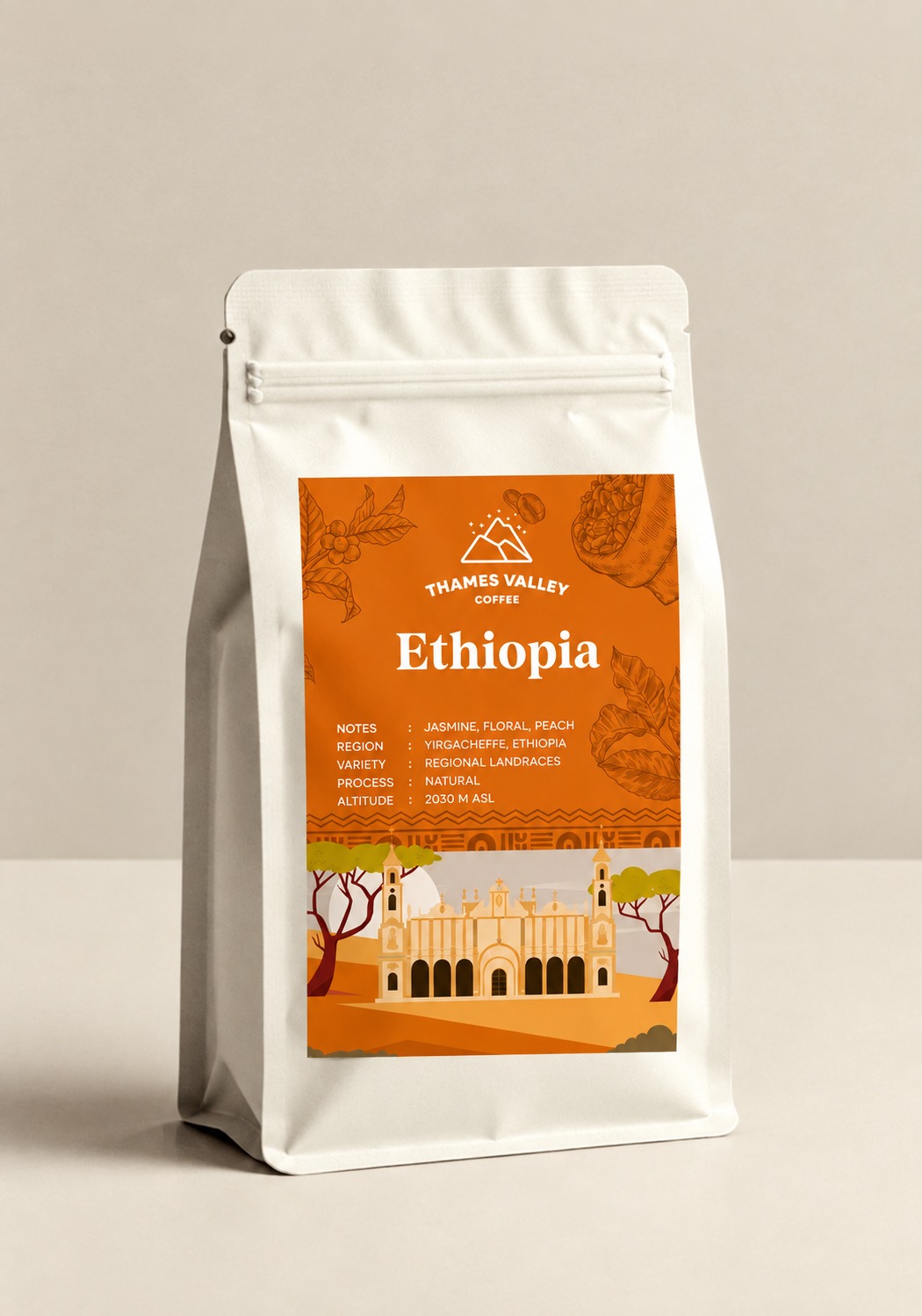
Ethiopian Coffee Beans
Price range: £12.00 through £35.00
Ethiopia Origin – Thames Valley Coffee
We import fully washed Grade 1 Ethiopia coffee from Yirgacheffe. The high 1925m altitude of Aricha washing station provides quality pulping, drying, and fermentation. The cooler climate of local farms transports ripe, sweet, and fully red cherries to the washing station. Trained farmers use traditional farming, organic picking, and careful transfer of cherries to the processing unit. These hand-picked cherries’ careful fermentation and raised-bed drying develop an even flavour.
Tasting Notes
Every cup of our Ethiopian coffee simply defines the authentic taste and rich aroma. Every cup with a note of jasmine, floral, and peach shares a profile of flavour to choose according to personal preferences. While tasting coffee is your personal experience, these tasting notes help to pick the right option from our multiple varieties of coffee.
CULTIVATION
Our selected Yirgacheffe farmers prefer traditional farming methods to modern machinery. Their deep knowledge about local climate and years of experience help in performing maximum tasks manually. The small family farming over less than 3 hectares allows equal attention to each plant.
The most favourable factor of Ethiopian coffee is the farmers’ intercropping techniques. They grow personal food with coffee, like bananas, avocados, and corn, which provide shade for coffee. It results in slow ripening of cherries with better taste development.
The favourable climate is not enough for Ethiopian farmers to achieve satisfactory growth of coffee. Therefore, Aricha Washing Station provides training to farmers for the best use of all natural advantages. These training sessions cover harvesting and the safe transportation of cherries.
Harvest and Post-Harvest
The trained workers manually pick only well-ripened cherries. It results in better sweetness, consistent body, and rich flavour in the final product. After transferring these hand-picked cherries, the staff again rechecks the stock to remove green or damaged pieces.
Next, the sorted cherries pass through the pulping step and at last, the beans are transferred into fermentation tanks. Workers wash parchment coffee to remove the minor remaining sticky layer, resulting in brighter acidity and consistent quality.
The Ethiopian washing station has 280 drying beds where workers frequently rake parchment. Each drying bed has a traceable code to maintain quality during the drying duration.
ETHIOPIA GRADE 1
Our Ethiopian coffee receives grading based on the beans’ visual appearance and cup quality. Our Grade 1 speciality coffee has no quakers, taints, or other cup faults.
| Weight | 250g, 500g, 1 kg |
|---|---|
| Grind | Whole bean, Filter, Espresso, Cafetiere, Aeropress |
Related products
-

Colombian Coffee Beans
Price range: £9.00 through £30.00 Select options This product has multiple variants. The options may be chosen on the product page -
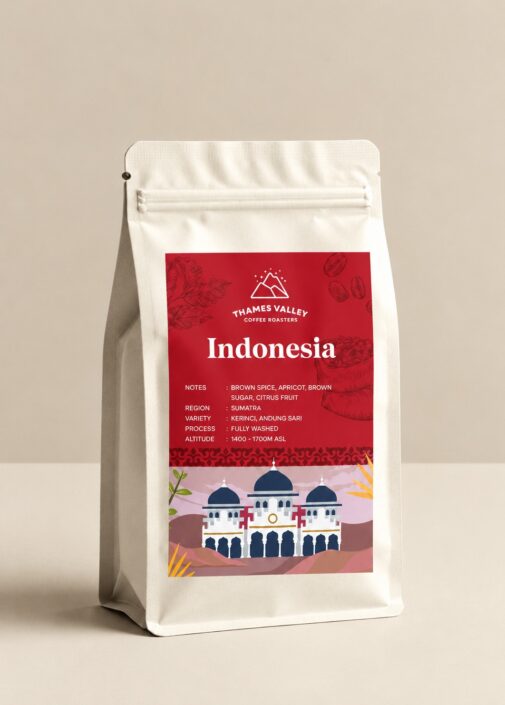
Indonesia Coffee Beans
Price range: £12.00 through £35.00 Select options This product has multiple variants. The options may be chosen on the product page -

Kenya Coffee
Price range: £12.00 through £35.00 Select options This product has multiple variants. The options may be chosen on the product page -

Blend Coffee
Price range: £9.00 through £30.00 Select options This product has multiple variants. The options may be chosen on the product page -

Out Of Stock
Tanzania AB Umoja Natural
Price range: £12.00 through £35.00 Select options This product has multiple variants. The options may be chosen on the product page -

Brazil Coffee Beans
Price range: £9.00 through £30.00 Select options This product has multiple variants. The options may be chosen on the product page
Reviews
There are no reviews yet.