
Kenya Coffee
Price range: £12.00 through £35.00
The Significance of Nairobi Kenya Coffee Origin
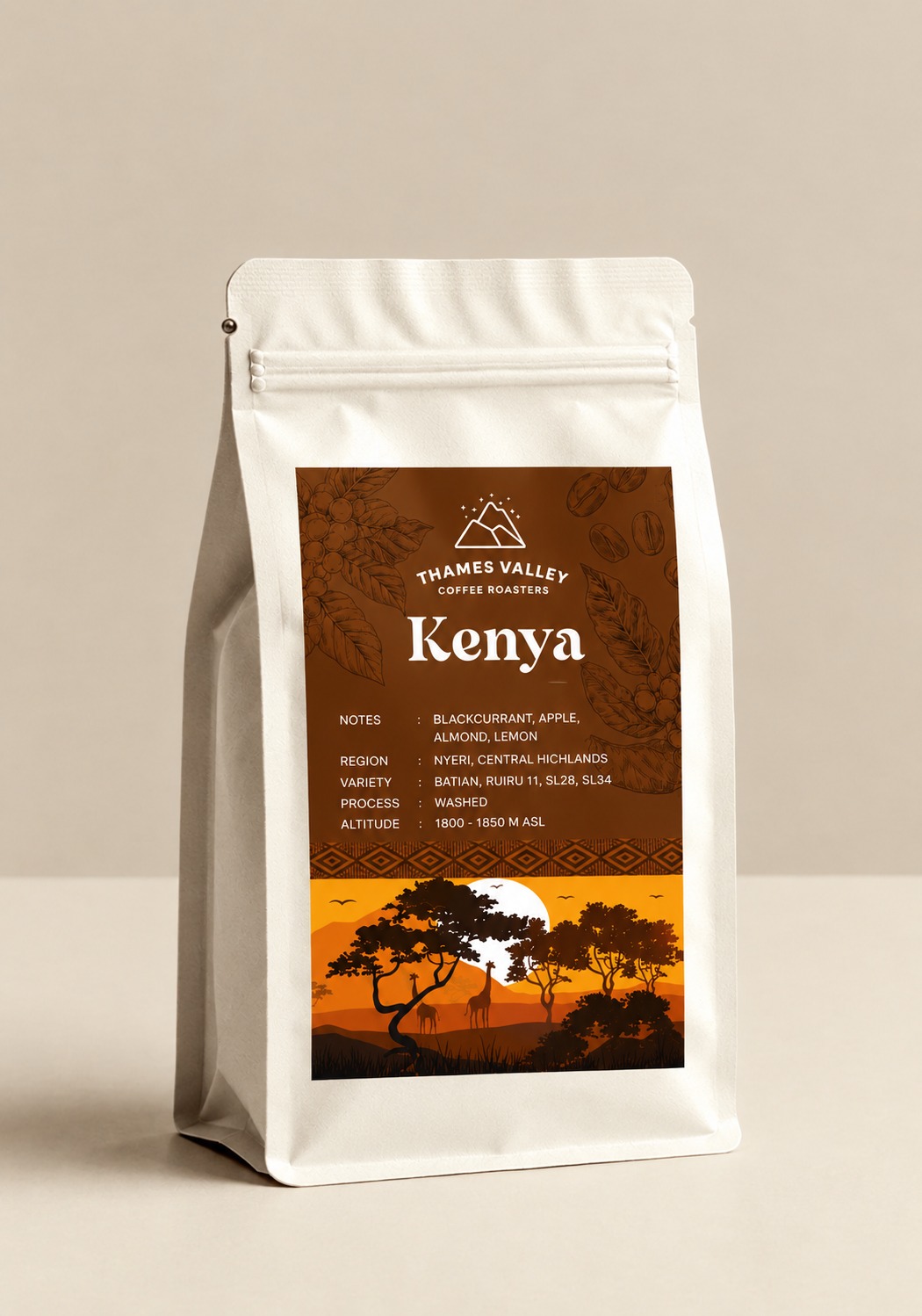
Nyeri sits in the Central Highlands, climbing the southern slopes of Mount Kenya toward the Aberdare Range. In this area, deep red volcanic soil holds onto moisture through two separate rainy seasons each year. Farms in this pocket of the highlands pick cherries between 1,800 and 1,850 metres above sea level. This elevation is high enough to slow ripening and let sugars and acids build inside the bean before harvest. That slow development, paired with mineral-rich soil, is why speciality buyers treat this stretch of highland farmland as some of the most consistent ground in the country for growing coffee.
Kenya Coffee Tasting Notes
Batian, Ruiru 11, SL28, and SL34 are harvested together, blending resilience with the bright complexity of heirloom lines. Once picked, cherries undergo a double‑washed process with a second soak, removing mucilage more thoroughly and sharpening clarity in the roast. The double wash and the altitude at which the cherries ripened combine to push blackcurrant to the front of the cup, backed by a crisp lift of apple and lemon. Almond rounds out the finish once that fruit fades, giving the aftertaste a softer, nuttier weight. The acidity and fruit character come through most clearly with filter brewing, though the cup holds its structure across other methods as well.
After drying, the parchment rests for several weeks before milling, where it is hulled and sorted into grades such as AA, AB and PB based on screen size; the peaberry lots set aside separately since only one bean develops inside each cherry rather than two. Licensed exporters cup samples from each lot ahead of the weekly Tuesday auction at the Nairobi Coffee Exchange, where buyers bid, and the highest offer wins, giving every batch a documented path back to the cooperative and washing station that processed it. Roasting is kept deliberately light for a lot like pushing the beans further would flatten the acidity built up at altitude into generic bitterness, so the roast is stopped early enough to protect that brightness. Batches are roasted to order rather than pulled from stock, so beans leave the roastery close to peak freshness rather than sitting roasted for weeks beforehand.
Ground options cover filter, espresso, cafetiere and Aeropress, or the beans can be left whole for grinding at home. This label is sold at 250g, alongside 500g and 1kg formats across the wider range. Wholesale buyers ordering this origin get the same free delivery Thames Valley Coffee runs across Milton Keynes, Aylesbury, High Wycombe, Amersham and Chesham, reaching into Greater London, Berkshire, Oxfordshire, Northamptonshire, Bedfordshire and Hertfordshire, with on-site guidance available on dialling in brew recipes for a washed, high-acidity origin like this one.
| Weight | 250g, 500g, 1 kg |
|---|---|
| Grind | Whole bean, Filter, Espresso, Cafetiere, Aeropress |
Related products
-

Out Of Stock
Tanzania AB Umoja Natural
Price range: £12.00 through £35.00 Select options This product has multiple variants. The options may be chosen on the product page -
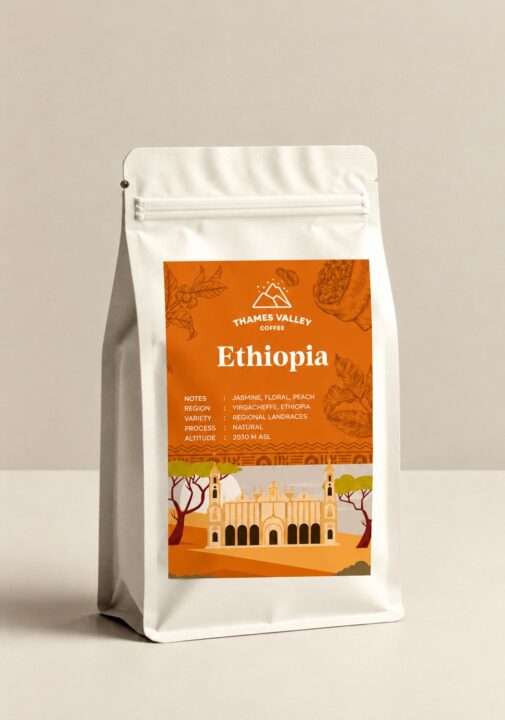
Ethiopian Coffee Beans
Price range: £12.00 through £35.00 Select options This product has multiple variants. The options may be chosen on the product page -
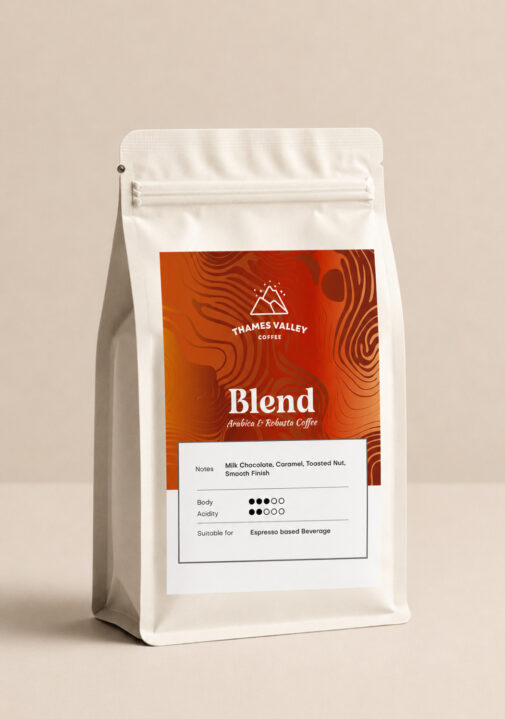
Blend Coffee
Price range: £9.00 through £30.00 Select options This product has multiple variants. The options may be chosen on the product page -
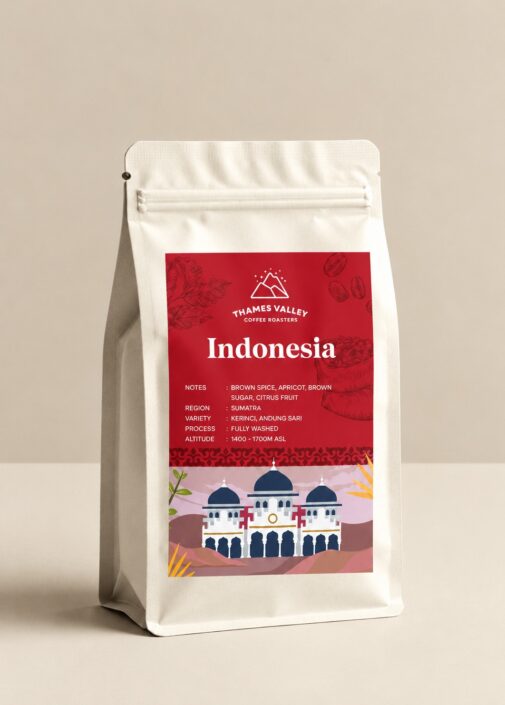
Indonesia Coffee Beans
Price range: £12.00 through £35.00 Select options This product has multiple variants. The options may be chosen on the product page -

Colombian Coffee Beans
Price range: £9.00 through £30.00 Select options This product has multiple variants. The options may be chosen on the product page -
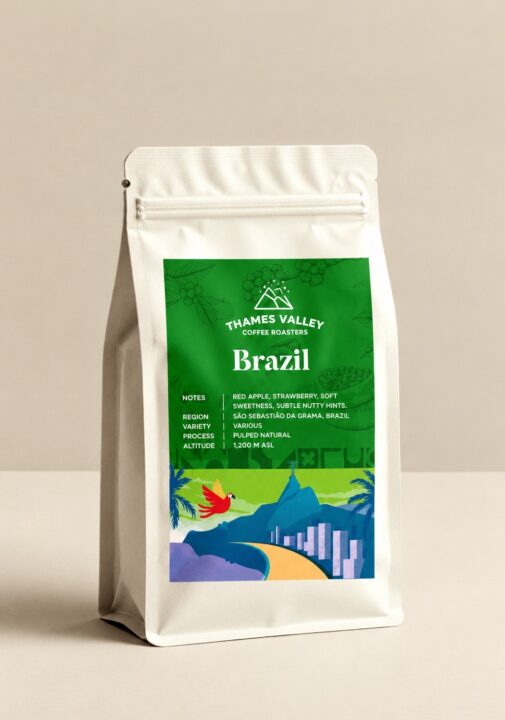
Brazil Coffee Beans
Price range: £9.00 through £30.00 Select options This product has multiple variants. The options may be chosen on the product page
Reviews
There are no reviews yet.